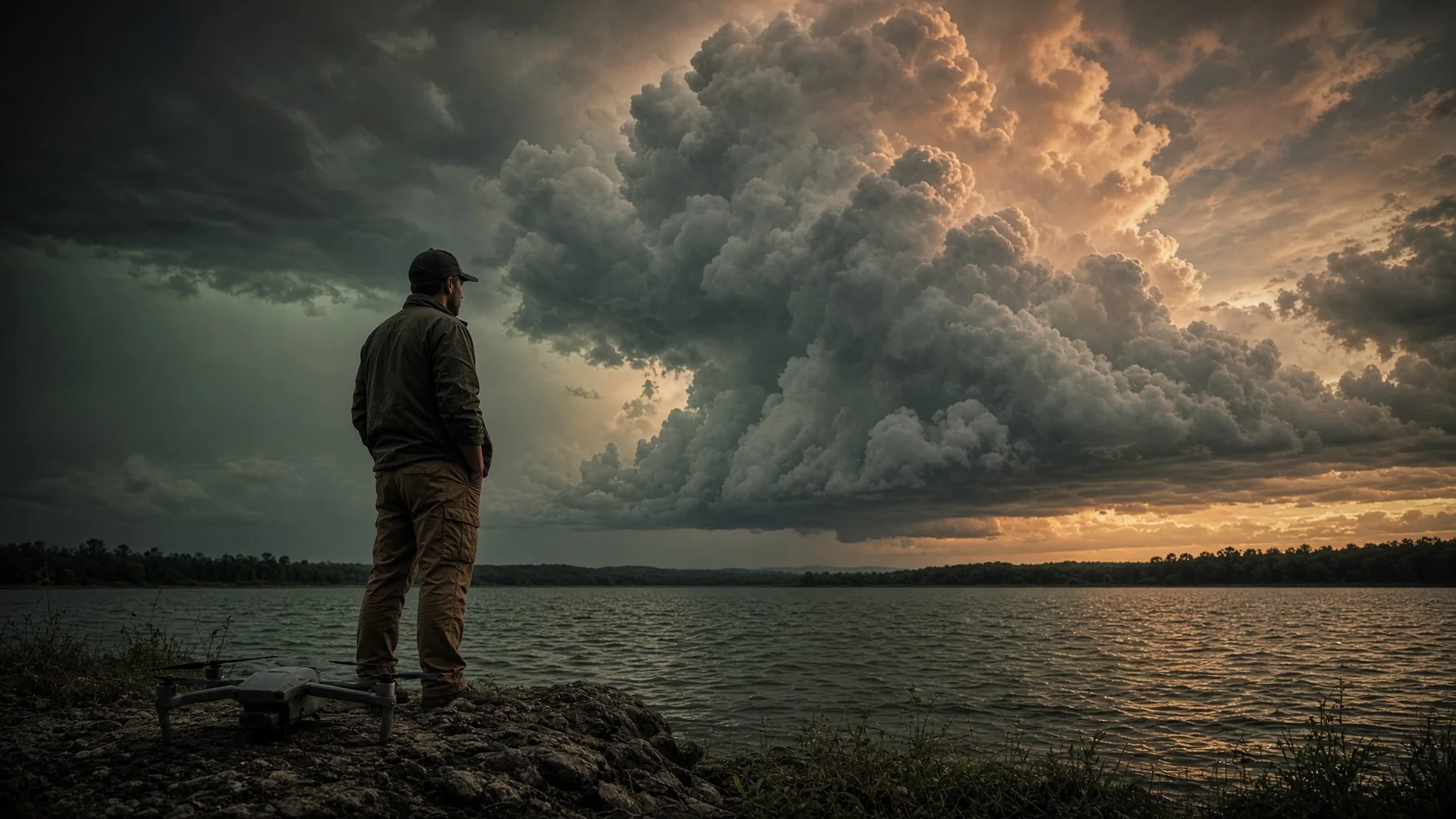
A blue-sky launch in Alabama can turn into a rushed landing faster than many pilots expect. Summer heat loads batteries and electronics, haze can reduce visibility, and afternoon convection can build into gusty winds, lightning, and heavy rain. The safest response is not a single weather-app check. It is a repeatable process that starts before leaving home and continues until the aircraft is packed away.
This guide is written for recreational flyers and Part 107 pilots operating around Alabama lakes, fields, construction sites, neighborhoods, events, and rural properties. It is not a substitute for the aircraft manufacturer’s limits or an official weather briefing. It is a practical way to turn those limits and forecasts into better field decisions.
Why Alabama Summer Weather Deserves Extra Respect
Heat and humidity do more than make the pilot uncomfortable. They affect battery temperature, electronics cooling, visibility, pilot concentration, and the speed at which weather can change. Afternoon thunderstorms may form locally even when the morning begins clear. Outflow from a nearby storm can reach a launch area before rain arrives, producing a sudden wind shift and a sharp increase in gusts.
The FAA places responsibility on the remote pilot or recreational flyer to understand local weather, aircraft limitations, and the planned operation. That means “the app said it was fine” is not enough once conditions in front of you begin to change.
Start With the Aircraft’s Published Limits
Every drone model has an operating-temperature range, wind tolerance, battery guidance, and warning system. Use the current manual for the exact aircraft and battery. Do not copy a temperature or wind limit from another model in the same brand family.
Before a summer job or recreational flight, verify:
- Aircraft operating-temperature range
- Battery charging-temperature range
- Recommended battery storage practices
- Maximum wind resistance and return-to-home behavior
- Temperature, voltage, or propulsion warnings shown in the flight app
- Whether the payload changes cooling, endurance, or wind performance
A manufacturer’s maximum is not automatically a comfortable working target. If the aircraft is already hot from a vehicle, sitting on dark pavement, carrying extra payload, or fighting wind, the practical margin may be smaller.
Keep Batteries Out of the Alabama Car-Oven
A closed vehicle can become dangerously hot. Do not leave flight batteries, controllers, phones, or tablets baking on a seat or dashboard. Transport batteries in a protective case away from direct sun. At the site, use shade and airflow rather than sealing hot batteries in an insulated box.
After a flight, allow the battery to cool before charging. Charging a hot battery can trigger protection systems and may accelerate wear. Inspect every pack for swelling, damage, unusual odor, abnormal heat, or inconsistent cell behavior. Retire and isolate a suspect battery according to the manufacturer’s instructions rather than trying to squeeze out one more flight.
Plan Shorter Flights With Larger Reserves
Summer operations often combine several endurance penalties: high temperature, headwind, repeated climbs, heavy payloads, and aggressive maneuvering. Instead of planning around the advertised maximum flight time, establish a conservative landing point.
Useful habits include:
- Launching with a fully assessed battery rather than simply trusting a percentage display
- Turning back earlier when flying downwind on the outbound leg
- Watching voltage, battery temperature, wind, and estimated return time together
- Avoiding long low-altitude runs over water, trees, or inaccessible terrain when conditions are deteriorating
- Landing immediately when the aircraft reports a serious battery, propulsion, or temperature warning
A reserve is valuable only if it remains available when the wind changes or the landing area becomes difficult.
Understand Pop-Up Storm Warning Signs
Do not wait for rain to hit the controller. Watch the sky and the ground around you. Growing dark cloud towers, a sudden temperature drop, distant thunder, fast-moving low clouds, blowing dust, treetops moving differently than they were ten minutes earlier, or a sharp wind-direction change can all justify ending the flight.
Thunder is an especially simple boundary. If thunder can be heard, lightning is close enough to be a threat. Land, power down, and move to a substantial building or hard-topped vehicle. A pavilion, tree, open shelter, or the tailgate of a truck is not reliable lightning protection.
The National Weather Service advises waiting at least 30 minutes after the last thunder before resuming outdoor activity. For drone work, that pause also gives the pilot time to reassess wind, rain, standing water, visibility, and whether another storm cell is developing.
Watch More Than Rain Percentage
A single precipitation percentage does not describe the full flight environment. Review several factors:
- Radar trend and storm-cell movement
- Hourly wind and gust forecast
- Lightning or thunderstorm outlook
- Ceiling, visibility, haze, and smoke
- Temperature and heat exposure
- Sunrise, sunset, and available daylight
- Temporary Flight Restrictions and controlled-airspace authorization needs
For commercial work, build a formal weather review into the preflight record. For recreational flights, use the same discipline even if the documentation is simpler.
Outflow Wind Can Arrive Before the Storm
One of the more deceptive summer hazards is thunderstorm outflow. A storm several miles away can send a cool, gusty boundary across the area. The launch point may remain dry while wind speed and direction change quickly.
This matters because a drone that traveled outward with a tailwind may face a strong headwind on return. It also matters near trees, buildings, ridgelines, and lake shorelines where turbulence can become irregular. When the wind begins changing rapidly, land while the operation is still routine.
Heat Also Affects the Pilot
Remote pilots make worse decisions when overheated, dehydrated, rushed, or staring into glare. Summer field planning should include drinking water, shade, sunscreen, a hat, and screen visibility. Do not use the shaded controller temperature as proof that the pilot is fine. Headache, dizziness, nausea, confusion, weakness, or unusual fatigue are reasons to stop.
For two-person work, the visual observer can monitor both the aircraft and the pilot’s condition. A clear handoff or abort phrase prevents a tired operator from pushing through an unsafe situation.
Build a Simple Alabama Summer Go/No-Go Checklist
Before leaving:
- Check current FAA airspace information, TFRs, and authorization requirements.
- Review official weather forecasts, radar trends, and thunderstorm timing.
- Confirm aircraft and battery temperature limits.
- Pack shade, water, spare landing-pad material, and weather protection.
- Identify an alternate launch point and an immediate shelter location.
At the site:
- Compare actual conditions with the forecast.
- Observe treetops, flags, water texture, clouds, haze, and distant storm activity.
- Keep batteries and electronics shaded before use.
- Establish a conservative battery return point.
- Define the weather abort triggers before takeoff.
During flight:
- Maintain visual line of sight and continuously watch changing visibility.
- Track wind on both outbound and return legs.
- Land for thunder, lightning, rapidly building clouds, sudden gusts, heavy rain, or aircraft warnings.
- Do not chase a shot after the weather margin is gone.
After flight:
- Move people and equipment to safe shelter when storms are nearby.
- Let batteries cool before charging.
- Inspect batteries and aircraft for heat or moisture problems.
- Record weather-related issues that should change the next operation.
Commercial Operators Need a Written Weather Decision
For Part 107 contractors, a written weather policy protects consistency. The policy should state who makes the final go/no-go decision, what sources are checked, which aircraft limits apply, what conditions trigger delay or cancellation, and how the client is notified.
This is especially important for construction, events, roof documentation, and real-estate schedules where pressure to “get something” can become strong. A weather delay is easier to explain than an aircraft incident, damaged property, or a hazardous lightning exposure.
The Best Summer Shot Is Sometimes the One You Reschedule
Alabama offers long summer daylight, green landscapes, active waterways, construction activity, and dramatic skies. It also demands respect for heat and rapidly changing weather. Good pilots do not prove skill by staying airborne the longest. They prove it by recognizing shrinking margins early and landing before the situation becomes urgent.
Check official conditions, know the aircraft’s limits, keep batteries cool, preserve a strong return reserve, and treat thunder as a firm stop signal. That process will produce more successful flights over time than trying to beat one fast-moving storm.
FAQs
Can I fly a drone when a thunderstorm is nearby but it is not raining?
Rain at the launch point is not the only hazard. Lightning and thunderstorm outflow can occur away from the visible rain shaft. If thunder is audible or winds are changing rapidly, land and seek proper shelter.
How long should I wait after hearing thunder?
National Weather Service guidance is to wait at least 30 minutes after the last sound of thunder before resuming outdoor activity. Recheck radar, wind, and local conditions before considering another flight.
Should I refrigerate a hot drone battery?
Do not improvise rapid cooling methods. Follow the battery manufacturer’s instructions. Move the battery out of direct sun, allow it to cool naturally in a safe ventilated location, and do not charge it while it is outside the approved charging-temperature range.
Does hot weather reduce drone flight time?
It can. Battery condition, temperature, payload, wind, flight style, and cooling all affect endurance. Use actual telemetry and conservative reserves rather than relying on advertised maximum flight time.
Can a recreational flyer ignore weather rules because the flight is only for fun?
No. Recreational flyers remain responsible for safe operation, must keep the drone within visual line of sight, give way to other aircraft, and follow applicable FAA rules and safety guidance.
Source Notes
FAA Recreational Flyers and Community-Based Organizations:
https://www.faa.gov/uas/recreational_flyers
FAA UAS Best Practices, including responsibility for local weather and aircraft limitations:
https://www.faa.gov/air_traffic/publications/atpubs/aip_html/part2_enr_section_8.8.html
FAA Small UAS Regulations Part 107 overview:
https://www.faa.gov/newsroom/small-unmanned-aircraft-systems-uas-regulations-part-107
National Weather Service Lightning Safety:
https://www.weather.gov/safety/lightning
National Weather Service Thunderstorm Safety:
https://www.weather.gov/safety/thunderstorm